Africa has many of the ingredients needed to compete for international business events yet continues to capture a relatively small share of the global association meetings market.
In 2025, the International Congress and Convention Association (ICCA) recorded 12 438 international and regional association meetings worldwide. Africa hosted 497, about 4% of the total, compared with 53% in Europe, 22% in Asia-Pacific, 10% in North America and 9% in Latin America.
That gap persists despite the continent’s growing investment in convention centres, hotels, air connectivity and business infrastructure.
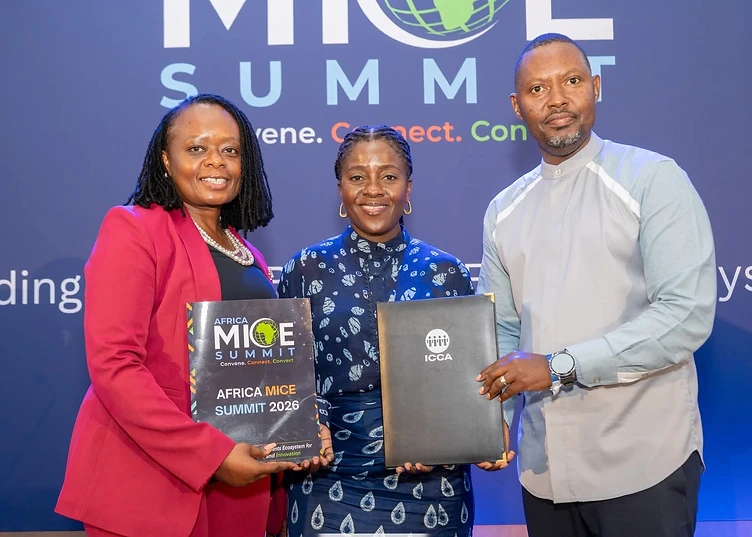
At the recent Africa MICE Summit in Mombasa, industry leaders argued that, while infrastructure and accessibility remain important, African destinations also need to better understand what international event organisers are looking for and develop more compelling propositions to attract their business.
Selling value
Carina Bauer, CEO of IMEX Group said convention centres, four- and five-star hotels, airlift and travel infrastructure are the minimum requirements to compete.
“The differentiator is value,” she said. “Don’t confuse value and price. Value in today’s market is not necessarily the lowest price.”
Value, she argued, means helping event organisers achieve the purpose of an event whether through engaging participants, creating memorable experiences or connecting delegates with relevant industries, institutions and people.
Naledi Kabo, CEO of the Africa Tourism Board, agrees that international delegates need a compelling reason to travel long distances to attend an event.
“I don’t want to travel 10 to 24 hours for an experience I could have in a conference room in Detroit,” she said.
Africa is already good at selling its attractions. The challenge is showing how those attractions, industries and institutions can make the meeting more valuable.
“Instead of simply showing event planners a convention centre or a landscape, destinations can connect delegates with companies, universities, government institutions and emerging industries. The destination becomes part of the meeting’s purpose,” Kabo said.
Laying the groundwork
However, even destinations with a strong proposition risk missing out if they engage too late with international organisers.
“The traditional model waits for a planner to express interest and then responds to a request for proposal,” Kabo said. “By that point, the buyer may already have a shortlist dominated by familiar destinations.”
African destinations should proactively identify associations, corporations and event organisers whose objectives align with their economic priorities, she added, to build relationships long before formal bidding processes begin.
This would also provide opportunities to address perceptions that can disadvantage African destinations.
“We do suffer from a perception problem more than, say, the European region,” Kabo said. “We need to be honest about that.”
Earlier engagement would allow individual destinations to address concerns about safety, accessibility and readiness before being excluded from consideration.
Kabo also highlighted opportunities for greater collaboration between African destinations, particularly on connectivity, event experiences and major bids.
Better coordination of the continent’s events calendar could make it easier for international delegates to attend multiple events without undertaking repeated long-haul journeys.
“For those events, strategically, the Africa bid, or presenting Africa as a destination, is much stronger,” Kabo said.
Bauer warned African destinations to be selective about the business they pursue. “Africa cannot bid for everything,” she said.
Instead, destinations should target events aligned with their existing expertise, economic priorities and industry networks rather than competing indiscriminately for international conferences.
Rwanda’s targeted approach
Rwanda provides an example of a coordinated strategy translated into an international event business.
According to Christian Manzi, Director of Destination Marketing at the Rwanda Convention Bureau, Rwanda made MICE a strategic priority and created the convention bureau to turn that ambition into a coordinated sales and destination development effort. The country then tackled one of the most basic barriers to international events: access.
“Rwanda introduced visa-free access for African nationals and visa-on-arrival arrangements for other international visitors, making it easier for the African delegates that many international associations were trying to reach,” Manzi pointed out.
But the country did not stop at access or infrastructure. It spent years building relationships in the meetings industry, attending international trade shows, meeting planners and joining organisations where professional congress organisers are already influencing future events.
“If you’re not in the room, you’re going to be left behind,” said Manzi.
The strategy has produced measurable results. Rwanda hosted 115 MICE events and 52 315 delegates in 2024, generating US$84.8 million in MICE revenue. In 2025, that rose to 165 international and regional events, more than 61 000 delegates and US$94.7 million in revenue.
Kigali also ranked second in Africa in ICCA’s 2025 association meetings rankings, with 35 meetings, behind Cape Town’s 55.
But Rwanda’s bigger lesson is not the number of meetings it has won but how it has positioned the destination.
Manzi says international associations are not simply looking for another convention centre but ways to grow their membership and reach new markets.
“Rwanda therefore sells access to Africa. The larger promise is that an association can bring its event to Kigali while gaining easier access to African participants and institutions,” he explained.